Where “Hong Kong in the Sea” and “Hong Kong on the Land” Meet
A Study on the Conservation of Historic Building Clusters in the Ap Lei Chau-Aberdeen-Lamma Island Area
Thematic Research Funded by the Built Heritage Conservation Fund, Development Bureau
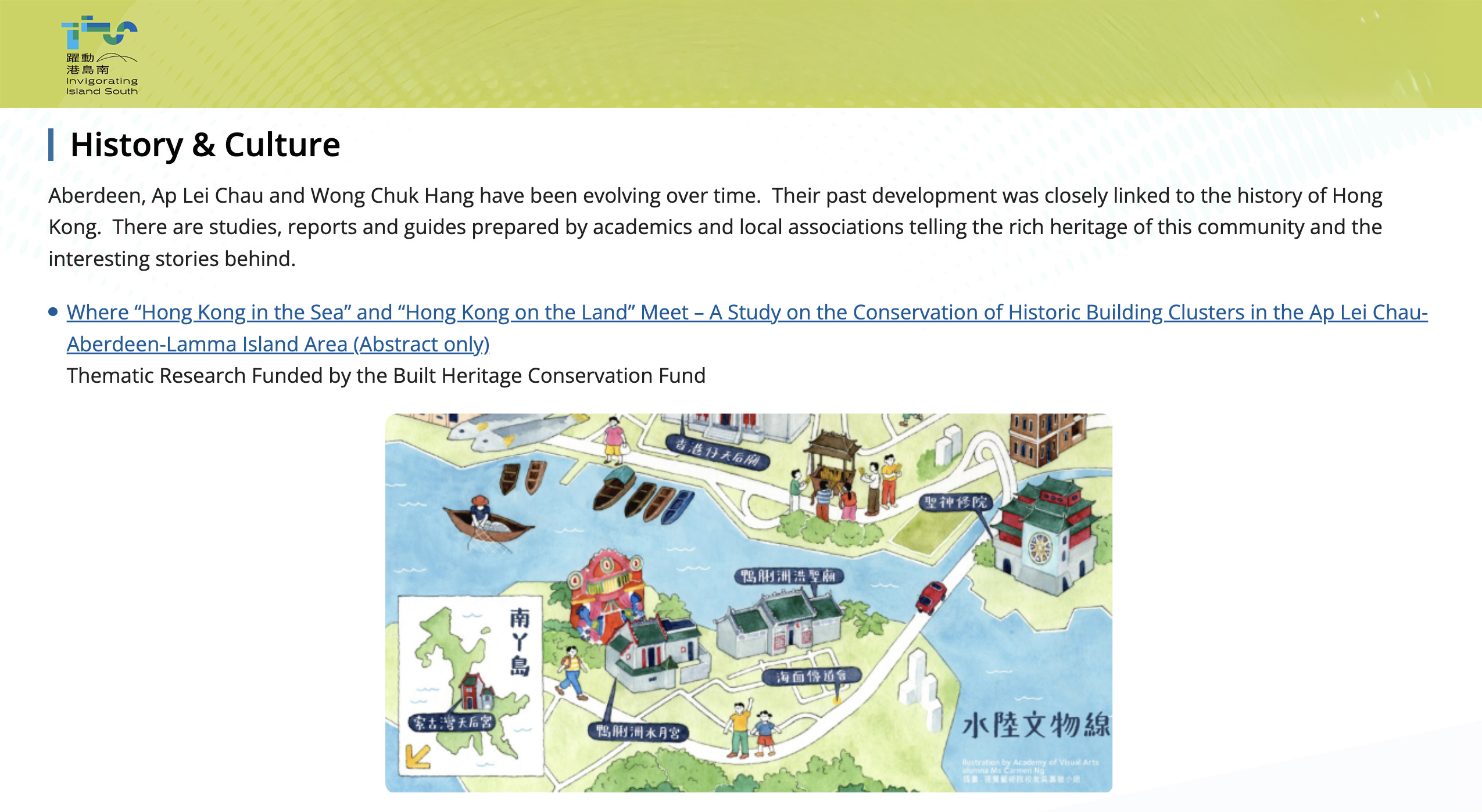
This study examines twelve significant sites in the Ap Lei Chau, Aberdeen, and Lamma areas that exemplify the region’s rich blend of maritime and land-based cultures. It explores the historical development of the area, as well as the communal and cultural characteristics of land-based settlers and floating communities.
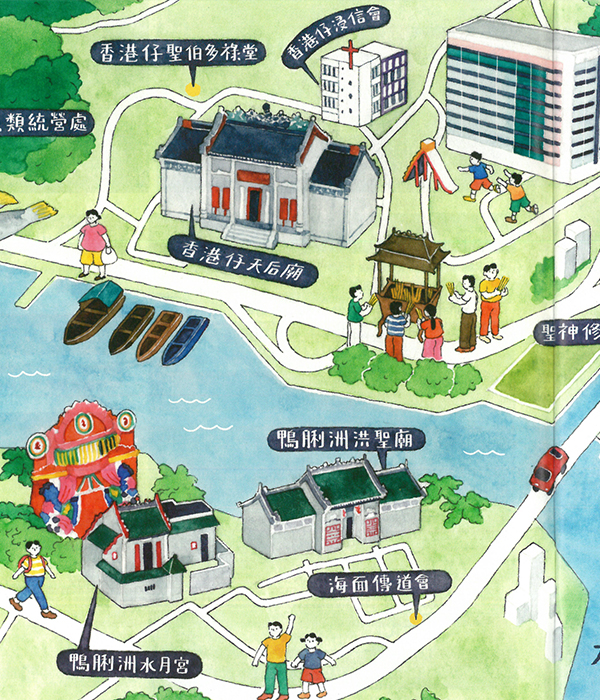
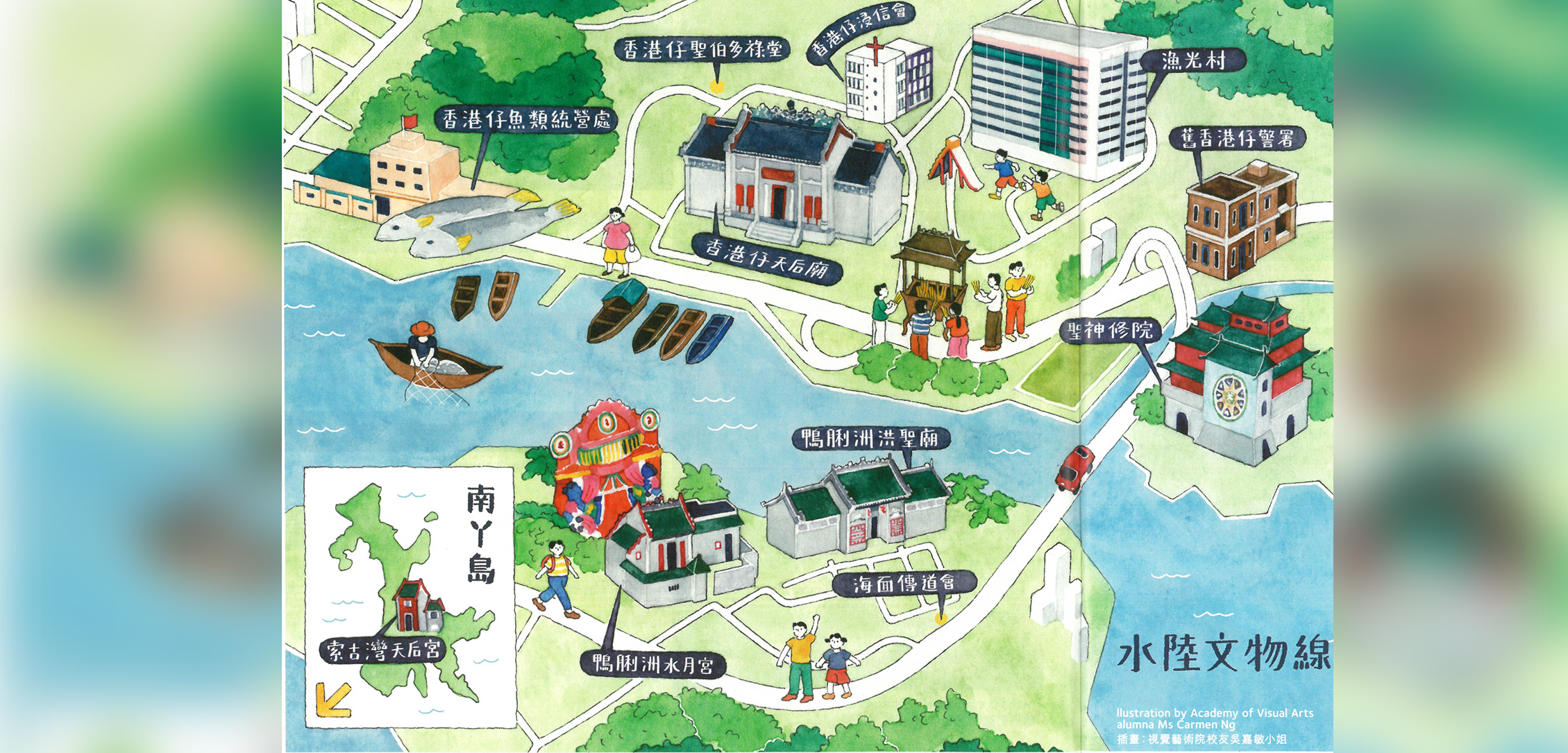
Five of the sites are traditional temples and shrines that are integral to the area’s long-established communities. These include Hung Shing Temple, Shui Yuet Temple, and Tai Wong Kung Temple on Ap Lei Chau, Tin Hau Temple in Aberdeen, the “Earth God” and “White Tiger” Shrine at the foot of the Old Aberdeen Police Station, and Tin Hau Temple in Sok Kwu Wan on Lamma Island. The study also profiles four buildings constructed by newcomers: the Old Aberdeen Police Station, the Holy Spirit Seminary College of Theology and Philosophy, St. Peter's Church, and the Hong Kong Harbour Mission Church. Finally, the study examines two post-war sites: the Aberdeen Wholesale Fish Market and Yue Kwong Chuen.
Through an examination of interactions between land and sea dwellers, the study connects these twelve sites (“points”) to form a “nexus” of land and sea cultural heritage (“line”). These relationships create a “plane” representing a unique network that links the cultures of land settlers, fishermen, and other floating communities in the area. To enhance public understanding of Hong Kong's diverse maritime and land-based cultures, the study proposes three routes centered on this "nexus" of cultural heritage.
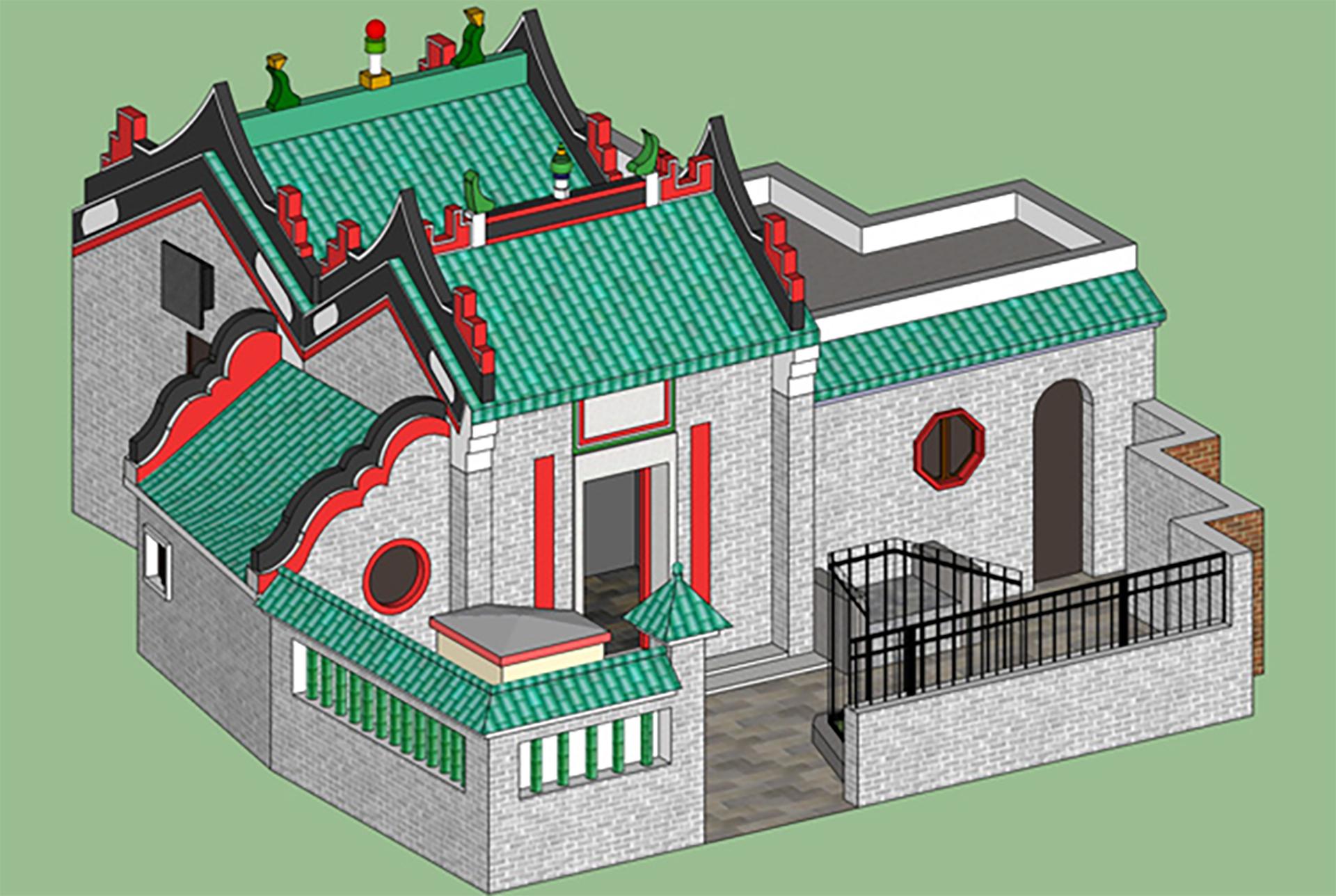
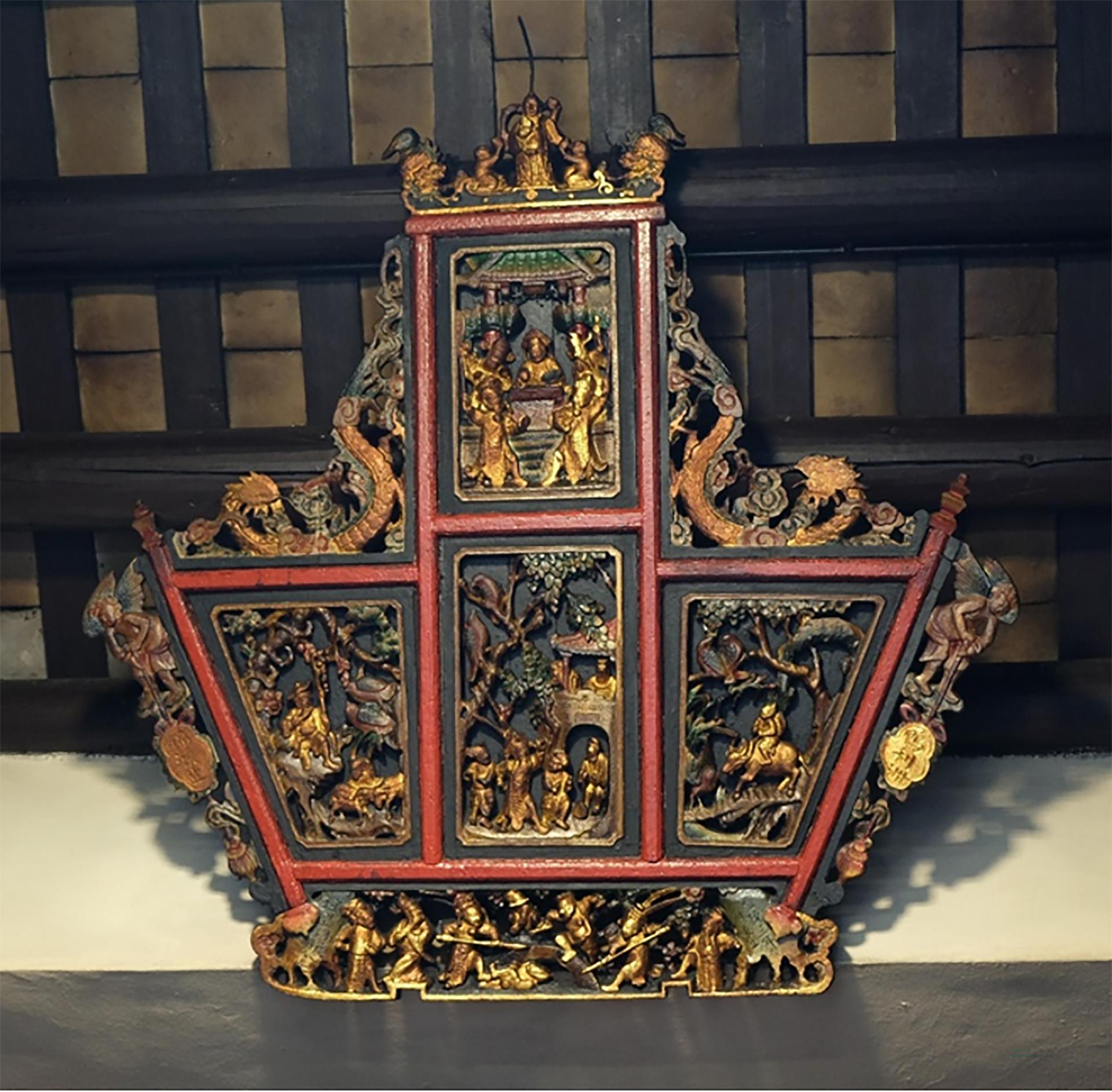
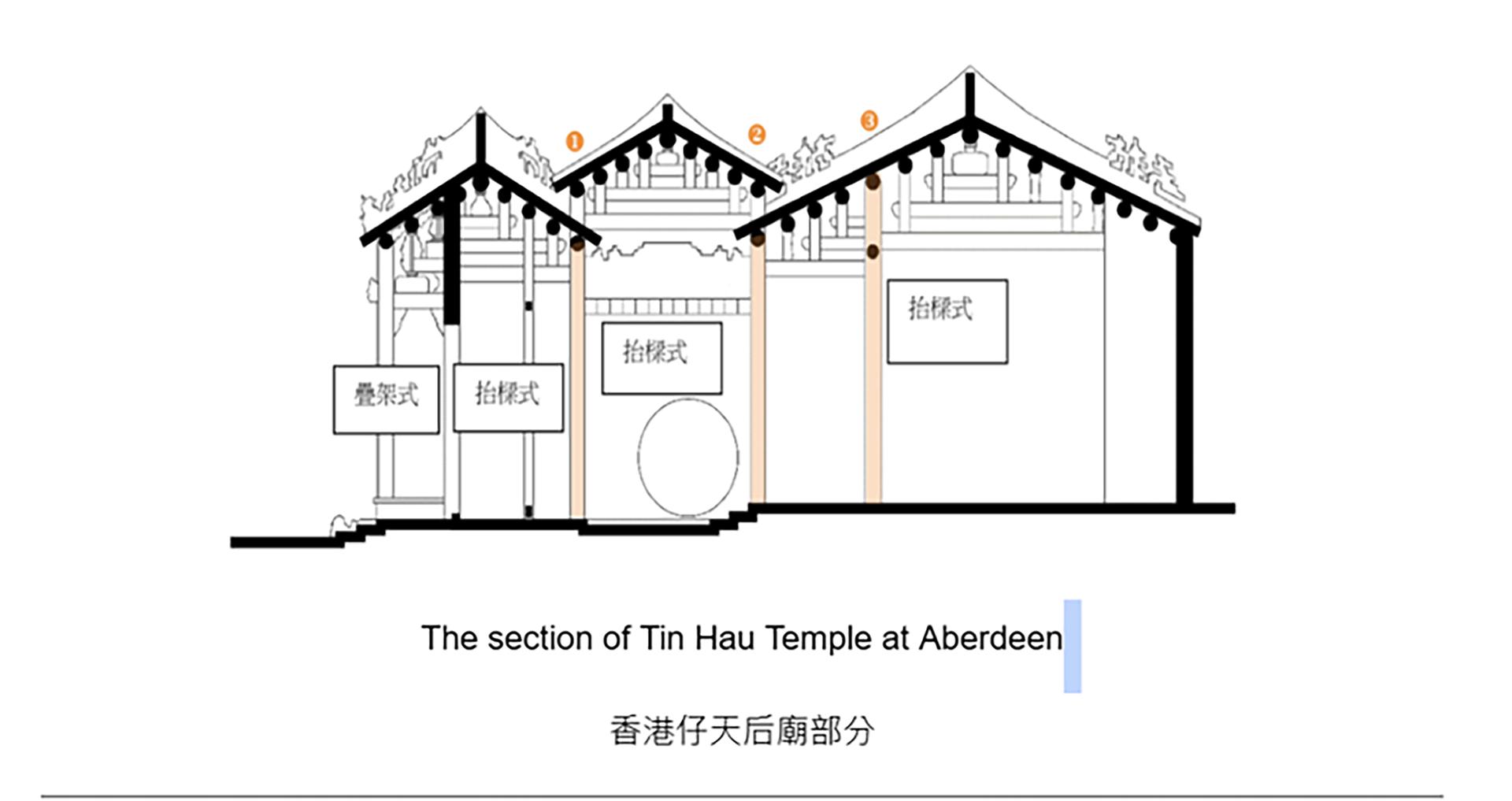
Visual records derived from the research findings of this project: